
by De Vreugde | Sep 28, 2017 | Blog
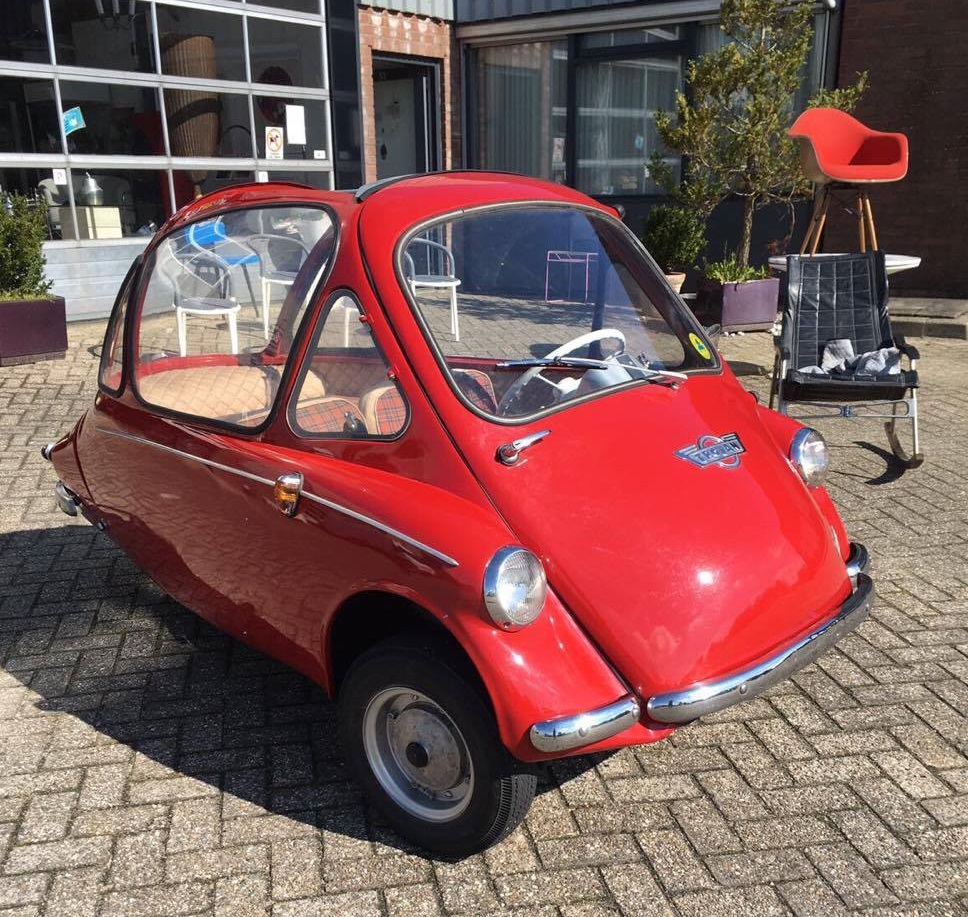
Here at De Vreugde Design, we take pride in adding “& Collectables” to our name. Every now and then we bump into a collectable so unique, we just have to share it with you! Jan Willem has a new-found passion for so called “microcars” and has now imported a Heinkel Trojan Kabine. This unique, bright red, three wheeled car will definitely draw the attention wen it hits the road! Apart from it’s unique appearance, there’s a whole story behind this tiny car.
From aircrafts to microcars
Surprising fact: Heinkel was a German aircraft manufacturing company. founded by and named after Ernst Heinkel. It produced bomber aircrafts for the Luftwaffe in World War II, pioneering with liquid-fueled rockets and turbojet-powered aircrafts. In 1956, the company decided to go with something different: the “Kabine” bubble car. There were two models: the Kabine Model 153 (with three wheels) and the Kabine Model 154 (with four wheels). Both had 204 cc engines that were later reduced to 198 cc for insurance purposes. The production didn’t last very long. After only two years, in 1958, Heinkel stopped the manufacturing. It was continued under license. First by Dundalk Engineering in Ireland, but it was taken over by Trojan in the UK soon after due to poor quality control. In 1966 the last Trojan Kabine has left the factory, meaning the end of their production.
Struggles of a front door
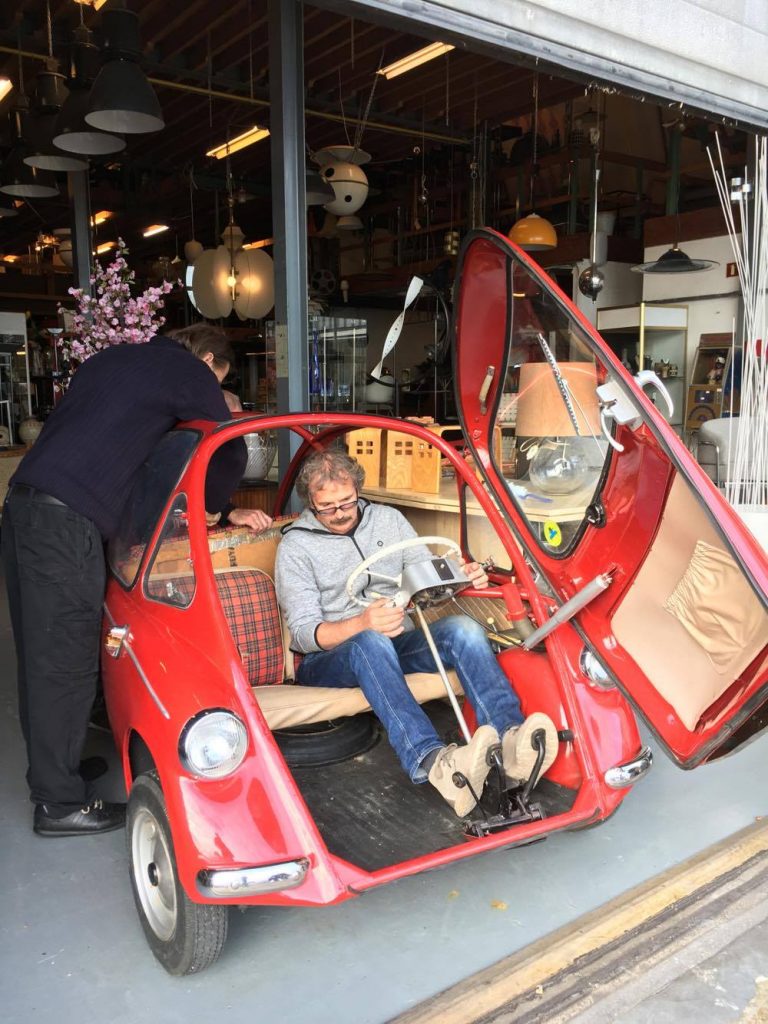
One of the unique features in the design was the opening being in the front, which could sometimes be quite a hassle. Heinkel wasn’t the first one to do this, Iso Rivolta had a similar microcar: the Isetta. To avoid patent issues, the Heinkel car has a fixed steering wheel that makes it a bit harder to enter and exit the car. Another difference between those cars is that the Heinkel has a reverse gear. A lot of other bubble cars didn’t have this. Since the door is in the front,this could be quite difficult when for example you would be facing a wall. Luckily this wasn’t a problem for the Kabine! The sun roof of the car doesn’t only serve as a nice feature for sunny days, but is at the same time an emergency exit, should the front door be jammed in collision.
Jan’s quest for a Heinkel
After finding out about microcars jears ago, Jan never stopped thinking about them. Still, deciding to really purchase one seemed like a big step. All the good cars seemed to be abroad, so there’s certain risks involved when importing one. After a long quest, Jan found a trustworthy contact and eventually took a leap of faith and bought his very own. At arrival here at our warehouse, the car turned out to be in even better condition than we could have hoped for! The upcoming month Jan will work om renovating some parts of the vehicle and at the end of October it will get it’s very own Dutch license plate. With that, Jan and his Kabine are ready to hit the road!
Are you thinking about having a microcar of your own? Or is there a different unique collectable that you are looking for? We have a big network of contacts, and can keep an eye out for you to find the perfect item. With our many years of experience, we know what the risks and advantages are when buying certain special items and will happily guide you in finding that unique piece you’ve always wanted! Feel free to contact us.

by De Vreugde | Jun 16, 2017 | Blog
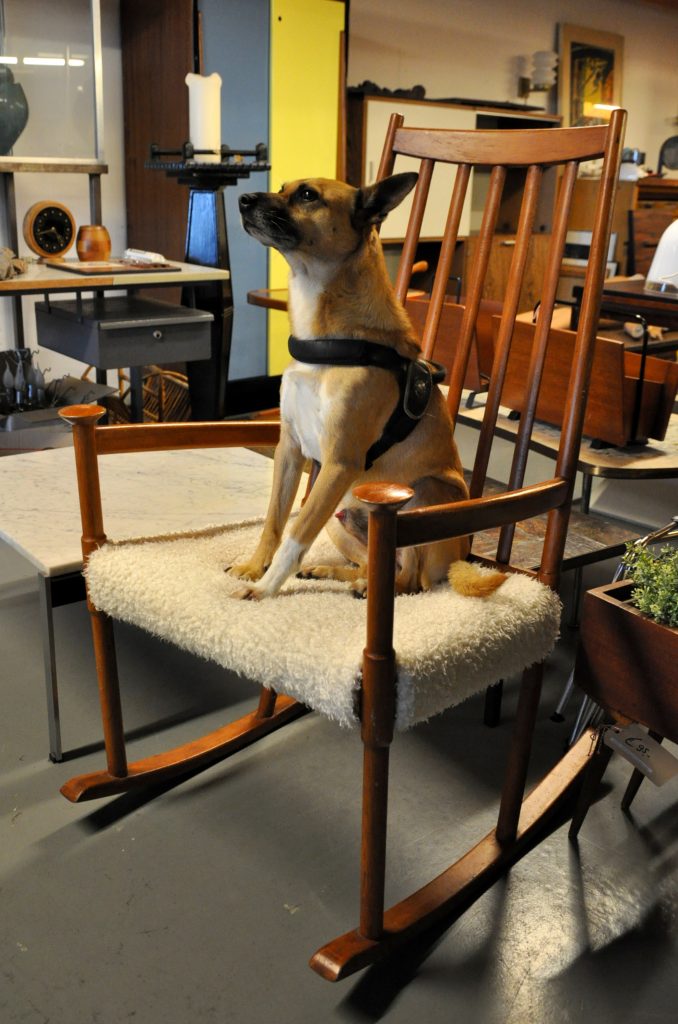
They are hard to resist, easy to love and a guaranteed family favourite once introduced to the interior: rocking chairs! After hard a long day, nothing is as relaxing as sitting down in your beloved chair, gently rocking back and forth.
A brief history
The rocker finds it’s origin all the way in the 18th century. They started as ordinary chairs with rockers attached by people in North America looking for some extra comfort while relaxing in their gardens. They reached England in 1725, which was the start of their worldwide succes. The first produced rockers were mostly made of wicker. Because of the new rocking element a lot of new creative designs where invented! Michael Thonet created the first bentwood rocker in 1860 and many other materials followed.
The healthy choice
Rocking chairs are special. Their seating experience is like nothing else! One of the reasons is that the chair rocks backwards untill the seater’s center of gravity is met. This allows the user to sit as relaxed as possible, even when there’s no actual rocking involved. Rockers have an amazing relaxing effect because of this and as we all know, it’s more important then ever to find a moment to have a moment to yourself in our current age where everybody is always busy. It has actually been researched and proved that a gentle rocking motion makes you more relaxed and has a very positive influence on the quality of your sleep. It’s the same effect as a parent rocking a child to sleep.
But wait! There’s more. Did you know that a rocking chair actually imrpoves your muscle tone? Rocking is an easy way to tone leg muscles. It won’t make a big difference for most of us, but for people who can’t handle weight-bearing exercises, it is a perfect way to strengthen the legs. People even experience rocking chairs as easing arthritis and back pains! It makes sense, because what would be a healthier way of sitting, than sitting on an ergonomic chair that allows you to move?
The stylish choice
Designers have experienced and embraced the versatility of rocking chairs for decades. Some of the most iconic pieces from midcentury design involve rockers! We all know the famous RAR chairs by Charles & Ray Eames, that we often have available as well. But there’s a lot more. What about creative children rockers? Franco Albini brought the history of rocking chairs back to the 20th century living rooms with his rattan design. Hans J. Wegner’s keyhole chair is one of the most famous midcentury rockers. Rockers come in all different shapes and sizes!
Find yourself a rocker and add a comfortable, beautiful piece of design history to your interior! Browse our rocking inventory now by clicking here!

by De Vreugde | Mar 8, 2017 | Blog
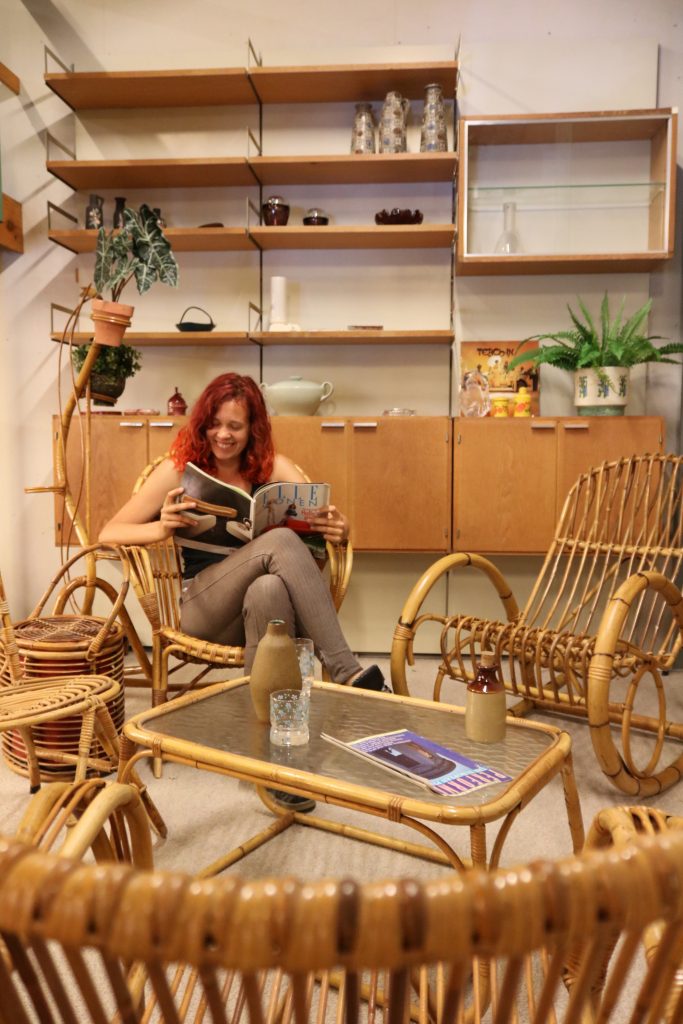
Being located in the Netherlands, we at De Vreugde Design have a special place in our hearts for Dutch design. One of the most recognizable techniques used by the Dutch in the mid 20th century, would be the use of rattan in furniture. From chairs and tables to magazine racks and coat racks: a touch of rattan can give the interior just that homely feeling that you’ve been looking for.
MADE IN THE NETHERLANDS
Vintage rattan (and wicker) pieces are very popular around the world. And finding the perfect piece to compliment your interior can be quite a search. It’s hard to imagine that in the 1950’s, basically every Dutch household included at least one of these pieces. A chair, a glass coffee tables with rattan magazine shelf or even sofas and foot stools. The exotic material is easy to use, lightweight and very versatile. No wonder the Dutch (among many other countries) fell in love with it!
The material comes from the rattan palm that can be found in the subtropics as long vines. Still, these chairs weren’t made in the former Dutch East Indies or New Guinea. In fact, they were mostly made in Noordwolde, a village in the north of the Netherlands. When thinking of mid-century rattan or wicker, you will most likely be thinking of manufacturers Rohé and Gebroeders Jonkers. Both are located in Noordwolde. Gebroeders Jonkers were the first to combine it with steel, giving way for a whole new range of products that will be the mid-century classics we love today.
DIRK VAN SLIEDREGT
The other name that is inescapably connected to rattan furniture, is Dirk van Sliedregt. He was one of the post-world war II designers that set the tone for mid-century Dutch design. This was because he kept looking for new ways to expand his horizon and knowledge within design and architecture. He never followed the trend where artistic aspects were more important than technique and craftsmanship, having functionality and comfort as his top priority. No wonder he made so many rattan pieces: this versatile material was his perfect match!
Of course a beautiful technique like this didn’t stay exclusive to the Netherlands. Other countries discovered the versatile material as well. Every country has there own style: the Dutch where looking for strong, comfortable designs. The Italians, for example, preferred to explore a bit more with curves and shapes and pushing the flexibility of rattan to create many different shapes. We love combining rattan designs from different countries, it creates a unique mix of styles while preserving a beautiful harmony in the interior.
THE FINISHING RATTAN TOUCH
In the mid 20th century, rattan furniture was the must-have for every Dutch interior. Nowadays, it’s a most wanted all over the world! It can be combined with many styles and periods, to give the interior a homely feeling, or to create some light in the room. Do you want to upgrade your rattan piece to give it a more personal style? Try adding a sheepskin or some pillows. Even painted rattan is available, if you want to set a specific tone in the room.
Looking for a wonderful rattan item to finish your interior? Lucky for you, we have them in stock very regularly. Have a look at our rattan collection and if you can’t find what you’re looking for, feel free to contact us and maybe we’ll find it for you!
